Published on:
10 min read
Japanese Garden Design: 7 Proven Tips for a Peaceful Yard
A well-designed Japanese garden does more than make a yard look beautiful. It changes how the space feels, guiding your eye, slowing your pace, and creating a sense of calm that many modern landscapes miss. This article breaks down seven proven design principles used in traditional Japanese gardens and adapts them for real homes, whether you have a compact suburban lot, a side yard, or a larger property. You will learn how to shape space with stone, gravel, water, evergreen structure, asymmetry, and restrained planting, while avoiding the common mistake of turning the garden into a theme-park version of “Zen.” Along the way, you will get practical measurements, maintenance advice, budget-conscious ideas, pros and cons of key design choices, and realistic examples that help you build a peaceful yard that still works in everyday life.
- •Why Japanese garden design feels calmer than most backyard landscaping
- •Tip 1 and Tip 2: Start with asymmetry and shape the garden around a focal view
- •Tip 3 and Tip 4: Use stone and gravel as the foundation, not just decoration
- •Tip 5 and Tip 6: Keep the plant palette restrained and make water optional, not mandatory
- •Tip 7: Design for movement, maintenance, and seasonal change from the beginning
- •Key Takeaways: 7 proven ways to create a peaceful Japanese-inspired yard
- •Conclusion: build calm through editing, not excess
Why Japanese garden design feels calmer than most backyard landscaping
Japanese garden design is often described as peaceful, but the calm effect is not accidental. It comes from a disciplined use of space, texture, proportion, and restraint. Instead of filling every corner with color, furniture, and decorative objects, Japanese gardens rely on fewer elements arranged with intention. Research in environmental psychology has repeatedly shown that natural settings with low visual clutter can reduce stress and mental fatigue. A 2021 review published in Frontiers in Psychology found that even brief exposure to restorative landscapes can improve mood and attention, which helps explain why simple, ordered gardens feel so grounding.
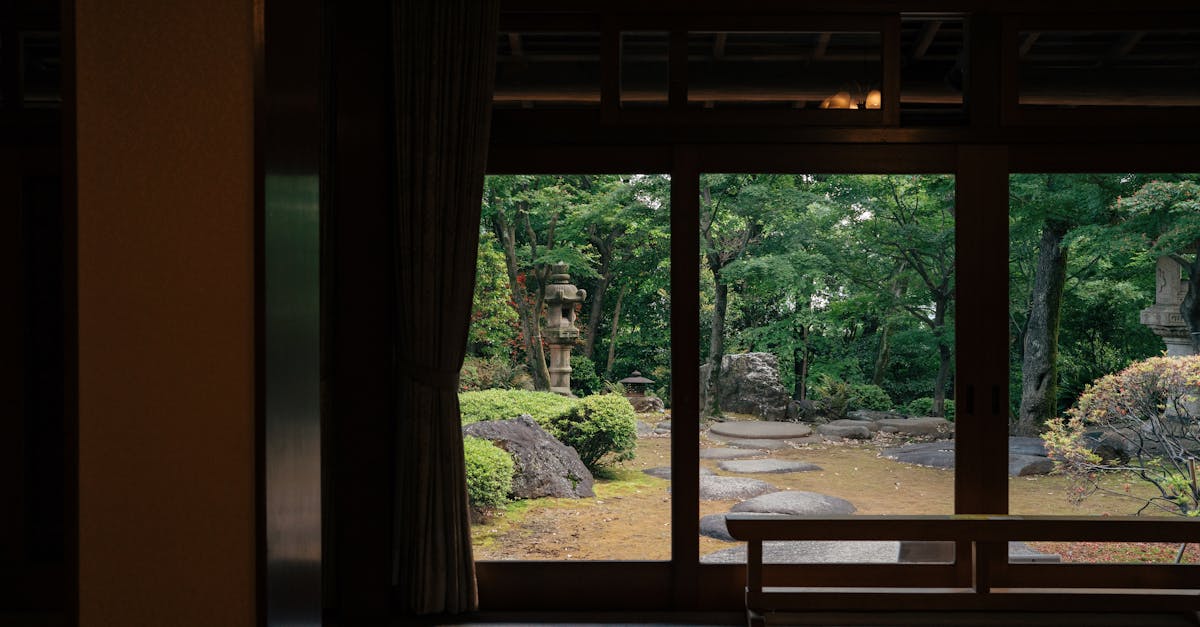
In practice, this style works because it directs movement and attention. A stepping-stone path slows your walking pace. A carefully placed lantern or boulder gives your eye a resting point. Evergreen structure keeps the yard visually stable across all four seasons. In Kyoto’s famous temple gardens, designers use borrowed scenery, asymmetry, and negative space to make compact grounds feel expansive. Homeowners can apply the same ideas without copying a temple garden outright.
The biggest mistake is treating Japanese design as a collection of accessories. A red bridge, a few bamboo poles, and a pagoda ornament rarely create tranquility on their own. What matters more is composition.
Pros of this approach:
- Lower visual noise and a more relaxing atmosphere
- Usually fewer plant varieties to manage
- Strong year-round structure, especially with evergreen bones
- Good restraint is harder than simply adding more plants
- Poor stone placement can look random rather than refined
- The design often reveals maintenance lapses quickly
Tip 1 and Tip 2: Start with asymmetry and shape the garden around a focal view
Two of the most reliable principles in Japanese garden design are asymmetry and a deliberate focal view. Western backyard layouts often center everything around a patio, a lawn, or a symmetrical flower bed. Japanese gardens usually feel more natural because they avoid mirror-image balance. A group of three stones, a pine offset from center, or a winding path with uneven intervals creates a subtle rhythm that feels organic rather than engineered.
Start by choosing one view you want to emphasize. This could be the scene from your kitchen window, the sightline from a back door, or a bench at the far end of the yard. Build the composition for that angle first. In small yards, this single decision can make the space feel larger because it creates visual depth. For example, on a 20-by-30-foot urban backyard, placing a medium specimen tree slightly off-center with dark evergreen shrubs behind it can pull the eye outward and make the yard feel less flat.
A practical rule many designers use is to place the main focal object about one-third in from either side, rather than dead center. Then support it with secondary elements at varied heights. This could mean one upright stone, one lower mounded shrub, and one ground-level mossy or gravel area.
Pros of designing around one focal view:
- Easier decisions about what to keep and remove
- Stronger visual impact from inside the house
- Better use of limited square footage
- A focal point loses power if too many decorative items compete with it
- Asymmetry can look accidental if spacing is not tested carefully
Tip 3 and Tip 4: Use stone and gravel as the foundation, not just decoration
If there is one material that gives Japanese gardens their sense of permanence, it is stone. Gravel and rock are not filler. They are structural elements that define movement, represent water, anchor plantings, and create age. In many traditional dry landscape gardens, or karesansui, raked gravel stands in for rivers or open water. That concept adapts beautifully to residential yards because gravel is more affordable and easier to maintain than installing a pond.
For a practical home project, begin with three stone roles: anchor stones, pathway stones, and edge stones. Anchor stones are larger, partially buried rocks that look as if they belong to the site. A common design mistake is leaving boulders sitting on top of the soil like dropped props. Burying roughly one-third of each stone instantly makes the arrangement feel older and more natural. Path stones should vary in spacing slightly so walking feels slowed and deliberate. Crushed granite or pea gravel can then unify the spaces around them.
Typical material costs vary by region, but homeowners in the U.S. often spend about 4 to 8 dollars per square foot for decorative gravel installed, while larger landscape boulders can range from 100 to 600 dollars each depending on size and delivery distance. That makes stone one of the highest-impact investments in the entire design.
Pros of relying on stone and gravel:
- Year-round visual structure, even in winter
- Lower water demand than lawn-heavy landscaping
- Excellent for small yards and side gardens
- Weed control matters, especially in the first year
- Cheap gravel colors can look artificial fast
- Poorly chosen stone sizes create visual clutter
Tip 5 and Tip 6: Keep the plant palette restrained and make water optional, not mandatory
Many homeowners assume a Japanese garden needs a koi pond, maple collection, bamboo grove, and moss everywhere. In reality, restraint is more authentic and often more successful. Traditional gardens typically use a limited number of plant forms repeated with subtle variation. That means one elegant tree shape, one mounding evergreen, one ground layer, and perhaps one seasonal accent can be enough. In a modern residential yard, that could look like a Japanese maple or pine, clipped boxwood or dwarf holly, mondo grass or sedge, and a spring accent such as azalea or camellia.
A restrained palette is also easier to maintain. Instead of managing 25 plant varieties, you may be caring for 6 to 10 chosen for texture and form. This matters because peaceful design breaks down quickly when overplanted beds become messy. If your climate is hot and dry, swap moisture-loving species for local alternatives that preserve the look. Black mondo grass, dwarf yaupon, blue fescue, or finely textured native sedges can achieve a similar effect depending on region.
Water is powerful, but not essential. A simple stone basin, small recirculating fountain, or dry stream bed can provide the same contemplative quality with less cost and maintenance than a full pond. Basic backyard pond installations frequently start around 3,000 to 8,000 dollars, while a compact recirculating water feature may cost a fraction of that.
Pros of a restrained palette and simpler water feature:
- Easier upkeep and lower replacement costs
- Stronger visual cohesion
- Better fit for small suburban lots
- Minimal plant variety can feel plain if textures are not layered well
- Real ponds add wildlife value that dry features cannot fully match
Tip 7: Design for movement, maintenance, and seasonal change from the beginning
A Japanese garden should not only look composed in a photo. It should feel good to move through and be realistic to care for over time. This is where many DIY projects fail. People focus on the reveal moment and forget that leaves fall, gravel shifts, moss dries out, and stepping stones need a comfortable walking rhythm. Good design anticipates these realities early.
Begin with circulation. Pathways should invite slow movement, not become obstacle courses. For informal stepping stones, many designers space stones to suit an average walking stride, usually around 18 to 24 inches center to center, then adjust slightly to slow the pace near focal points. If the path leads to a bench or lantern, the destination should feel earned, not accidental. In family yards, also consider practical access for wheelbarrows, garden hoses, and routine pruning.
Seasonality matters just as much. A peaceful yard in April can feel empty in January if every point of interest is deciduous. Build around evergreen massing first, then add selective moments of seasonal drama. One laceleaf maple that glows in fall is more effective than six competing specimen trees. In wetter climates, moss can be stunning. In sunnier or drier sites, use gravel, low groundcovers, or shaded stone instead of fighting nature.
Smart maintenance planning includes:
- Limiting lawn edges that require weekly trimming
- Installing discreet irrigation for establishment years only
- Choosing slow-growing shrubs when possible
- Planning for light but regular pruning rather than heavy seasonal cutbacks
Key Takeaways: 7 proven ways to create a peaceful Japanese-inspired yard
If you want the shortest path to a yard that feels calm, focus less on decoration and more on structure. The seven proven tips in this article work because they shape experience, not just appearance. First, embrace restraint so the space has room to breathe. Second, use asymmetry to create a natural rhythm. Third, design around one focal view rather than trying to impress from every angle. Fourth, treat stone and gravel as core building materials, not afterthoughts. Fifth, keep your plant palette tight and repeat forms for unity. Sixth, remember that water can be suggested through a basin, fountain, or dry stream if a pond is not practical. Seventh, design pathways and plantings with maintenance and seasonal change in mind.
If you are starting from scratch, do this over one weekend:
- Stand at your main viewing point and take three photos of the yard
- Mark one focal area and one path on paper
- Remove at least one-third of nonessential ornaments or mixed plant clutter
- Add one anchor stone grouping and one unified gravel or mulch area
- Choose only 6 to 10 plant varieties for the whole design
Conclusion: build calm through editing, not excess
A peaceful Japanese-inspired yard is not created by copying symbols. It is created by making better decisions about space, sightlines, materials, and restraint. Start with one strong view, use asymmetry instead of rigid balance, invest in stone and gravel for structure, and limit your plant choices so the garden feels unified year-round. If water fits your budget and lifestyle, keep it simple. If it does not, suggest it through texture and form.
Your next step is practical: walk your yard, identify what feels visually noisy, and remove before you add. Then sketch one path, one focal point, and one planting palette. Even a modest suburban yard can become noticeably calmer when each element has a purpose. The goal is not perfection in one weekend. The goal is to create a landscape that slows you down every time you step outside.
Published on .
Share now!
IR
Isabella Reed
Author
The information on this site is of a general nature only and is not intended to address the specific circumstances of any particular individual or entity. It is not intended or implied to be a substitute for professional advice.